

 Recently
 Locate
Cart
0

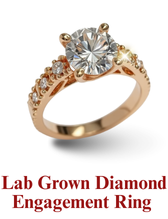


Buying a diamond engagement ring should feel exciting—not like you're trying to solve a financial puzzle.
The good news? You don't need the biggest diamond or the most expensive setting to get a beautiful ring.
This simple engagement ring buying guide will help you understand where your money actually goes and how to choose a stunning diamond ring without unnecessary spending.
💎 1. Start With a Budget, Not a Diamond
Before browsing engagement rings, decide what you're comfortable spending.
- Set a realistic budget.
- Keep taxes, setting and certification costs in mind.
- Don't increase your budget just because a particular diamond looks impressive.
- Focus on overall beauty rather than carat weight alone.
Smart move: A well-proportioned diamond can look more impressive than a larger but poorly selected stone.
✨ 2. Understand the 4Cs
The 4Cs—Cut, Color, Clarity and Carat—are the foundation of most diamond buying decisions.
Cut
- Controls how effectively a diamond reflects light.
- Often has a major impact on sparkle.
- Prioritize a good cut before simply chasing carat size.
Color
- Determines how much color is visible.
- Near-colorless diamonds can offer a beautiful appearance without always requiring the highest color grade.
Clarity
- Refers to internal and external characteristics.
- Some inclusions may be difficult to see without magnification.
- Don't automatically pay more for a clarity grade you cannot visually appreciate.
Carat
- Refers to weight, not directly to how large the diamond looks.
- Two diamonds with the same carat weight can look different because of their proportions and diamond shapes.

💍 3. Choose the Right Diamond Shape
Choosing the best diamond shape isn't simply about following what's trending.
Consider:
- Round: Classic and highly versatile
- Oval: Elegant and elongated
- Pear: Distinctive and romantic
- Emerald: Clean and sophisticated
- Cushion: Soft and vintage-inspired
- Princess: Modern and geometric
- Marquise: Dramatic and elongated
Different diamond shapes can create different visual sizes and styles at similar carat weights.
Money-saving tip: Compare multiple shapes before deciding on your diamond ring.
💎 4. Consider a Lab Grown Diamond
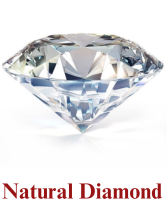
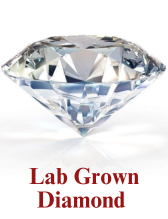
A lab grown diamond can be an option for buyers who want a larger or higher-spec diamond while keeping the overall ring budget more controlled.
Lab grown diamonds have the same basic crystal structure and physical properties as natural diamonds, but they are created through controlled technological processes rather than geological formation.
When comparing a lab grown diamond with a natural diamond, compare:
- Cut
- Color
- Clarity
- Carat
- Certification
- Price
- Design
The goal isn't simply to choose the cheapest diamond—it's to find the combination that gives you the look and specifications you actually want.
🔍 5. Don't Pay for Clarity You Can't See
One of the easiest mistakes in a diamond ring buying guide is assuming the highest clarity grade is automatically the best value.
Instead:
- Look at the diamond visually.
- Check the certification.
- Compare similar diamonds.
- Consider whether inclusions are visible to the naked eye.
- Put more emphasis on overall appearance.
A diamond doesn't need to be the highest clarity grade to look beautiful.
⚖️ 6. Don't Obsess Over Round Numbers
A common buying habit is choosing exactly:
- 1.00 CT
- 1.50 CT
- 2.00 CT
But diamonds just below these popular weight points can sometimes offer a different price while still giving you the appearance you're looking for.
Example: Instead of automatically searching only for a 1.00 CT diamond, compare nearby weights and dimensions.
This is one of the simplest ways to make your rings budget work harder.
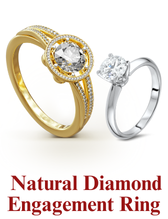
💍 7. Choose the Setting Carefully
The diamond isn't the only part of an engagement ring.
Popular settings include:
- Solitaire
- Halo
- Three-stone
- Bezel
- Pavé
- Hidden halo
A simple setting can let the center diamond take the spotlight, while more detailed settings can add extra visual impact.
Tip: Don't spend heavily on details you don't personally care about.
🛍️ 8. Compare the Complete Ring Price
When comparing diamond engagement rings, don't compare only the diamond price.
Look at the complete package:
- Center diamond
- Side diamonds
- Gold or platinum
- Setting/design
- Making charges
- Certification
- Taxes
- Shipping
- Warranty or after-sales services
A cheaper-looking price isn't always cheaper once all costs are added.
📋 Your Quick Engagement Ring Buying Guide
Before purchasing, ask:
- ✅ What is my comfortable budget?
- ✅ Which diamond shape do I prefer?
- ✅ Have I compared different carat sizes?
- ✅ Did I check cut quality?
- ✅ Is the diamond certified?
- ✅ Did I compare natural and lab grown diamond options?
- ✅ Have I checked the complete ring price?
- ✅ Does the setting match my lifestyle?
- ✅ Am I paying for features I actually want?
If you can answer these questions confidently, you're already much better prepared.
✨ The Smart Way to Buy
A great diamond ring isn't necessarily the ring with the biggest carat or highest grade.
A smarter approach is to balance:
Diamond quality + shape + design + budget + personal style
Whether you're shopping for classic engagement rings, modern diamond engagement rings, or a lab grown diamond ring, compare the complete value—not just one specification.
Final Thought
The best way to avoid overpaying is simple:
Know what you're buying before you fall in love with the price tag.
Use this diamond ring buying guide, compare your options, understand the diamond shapes, and choose the best diamond shape and specifications for your budget.
That way, your engagement ring can deliver the sparkle you want—without making your wallet regret the proposal.


